COVID-19: A Respiratory Therapist’s Reflection — The Pandemic That Changed Us Forever
By William Jackson, AAS, RRT, RRT-NPS, AE-C, CTTS, AACVPR
Secretary, NJSRC Executive Board • Communications/PR Committee Chair
There are moments in history that divide time into “before” and “after.” For healthcare professionals, COVID-19 became that defining moment.
It was more than a pandemic. It was a test of science, compassion, endurance, and the human spirit. For those of us in respiratory care, it became the defining experience of our professional lives.
When the World Changed
Before 2020, respiratory therapists were often the unseen specialists of healthcare. We cared for premature infants taking their first breaths, trauma victims struggling to survive, patients with chronic lung disease, and those requiring life support. Our work was essential, but it was frequently performed behind the scenes.
Then the world changed.
Almost overnight, respiratory therapists found ourselves at the center of the greatest respiratory crisis in more than a century. Every alarm on a ventilator, every oxygen adjustment, every arterial blood gas, and every emergency intubation became part of a global fight against an invisible enemy.
The uncertainty was overwhelming. Every day brought new questions and very few answers.
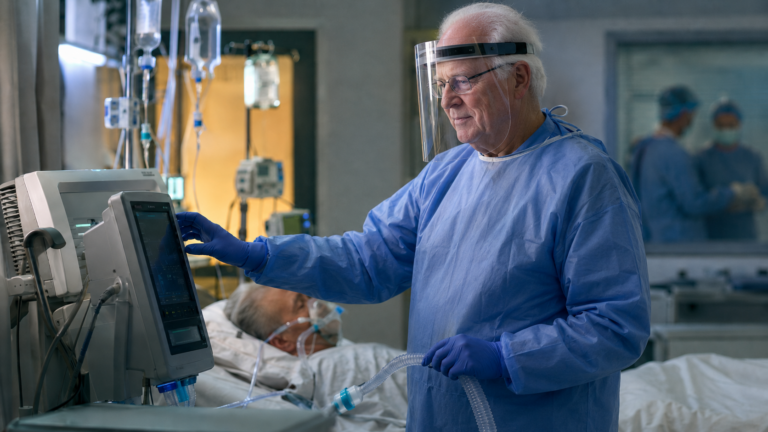
We watched healthy individuals become critically ill within hours. Families stood outside hospitals, unable to visit loved ones. Patients spent their final moments surrounded not by family, but by healthcare professionals wearing masks, gowns, gloves, and face shields.
Behind every layer of protective equipment was a human being carrying fear.
We feared bringing the virus home. Many of us stripped down in garages before entering our homes. In my case, I built a “COVID Closet” outside, where I would undress before coming inside in my underwear.
We feared exposing our spouses, children, parents, and friends. Many healthcare workers isolated themselves from their own families for weeks or months, sacrificing precious moments together to protect those they loved.
Birthdays were missed. Holidays were celebrated through video calls. Grandchildren waved through windows.
Yet every shift began the same way.
We walked back into the hospital.
Learning in Real Time
Respiratory therapists quickly became experts in a disease no one had treated before. We learned that COVID-19 affected the lungs differently than traditional respiratory failure, and we adjusted our approach as new evidence and bedside experience emerged.
We adapted ventilator strategies, developed new protocols, tracked daily driving pressures, and worked side by side with physicians, nurses, pharmacists, perfusionists, and countless other professionals to improve survival.
Medicine advanced at an extraordinary pace because healthcare professionals shared knowledge across hospitals, states, and countries. What we learned one month changed patient care the next.
The ventilator became one of the defining symbols of the pandemic, but behind every machine stood a respiratory therapist making constant decisions.
We adjusted oxygen levels, monitored pressures, assessed blood gases, and continuously balanced the delicate line between giving the lungs enough support while minimizing additional injury.
Each breath mattered.
Every patient represented a family hoping for one more chance.
Teamwork at the Bedside
Prone positioning became a carefully coordinated effort. Every turn required planning.
How many people were needed? Where should the pads and pillows be placed? Which respiratory therapist would manage the patient’s head and clamp the endotracheal tube? Were the IV lines secure? Was the ECMO tubing protected? Did the patient have the medications and support they needed, including therapies such as Veletri (epoprostenol sodium)? Were sedation levels appropriate?
In those moments, communication mattered as much as clinical skill.
Each clinician had a role, and every detail—from tubing placement to medication timing—could affect a patient’s chance of survival.
That teamwork became one of the defining characteristics of the pandemic response. Professional titles mattered less than the shared mission in front of us: do everything possible to help the patient survive.
The Human Cost
The emotional burden was unlike anything most healthcare workers had ever experienced.
We celebrated victories when patients recovered enough to leave intensive care, but we also experienced heartbreaking losses. Some days, there were simply too many—too many patients, too many deaths, and too many difficult decisions.
Healthcare professionals became family when families could not be present.
We held hands. We comforted frightened patients. We facilitated final video calls between loved ones separated by isolation precautions.
Those moments remain etched in our memories forever.
One shift seemed to blur into the next, and days became weeks. Staffing shortages stretched clinicians beyond reasonable limits, and burnout became widespread. Yet despite those obstacles, healthcare professionals continued to answer the call.
That resilience should never be forgotten.
A Profession Made Visible
COVID-19 also transformed public understanding of respiratory care.
Millions of people learned what oxygen saturation meant. Terms such as ventilator, ECMO, prone positioning, and respiratory failure entered everyday conversations.
Suddenly, the work respiratory therapists had quietly performed for decades became visible.
With that visibility came recognition—but also responsibility.
The pandemic revealed strengths within healthcare while exposing vulnerabilities that must never be ignored. Supply chains failed. Protective equipment became scarce. Staffing shortages pushed clinicians to their limits.
Yet healthcare professionals continued to show up.
The greatest lesson of COVID-19 may not have been about ventilators or viruses.
It was about people.
We Do More Than Manage Machines
The pandemic reminded us that medicine is ultimately a profession of service.
Technology saves lives, but compassion helps heal suffering. Clinical expertise matters, but so does sitting quietly with a frightened patient who simply needs another human being nearby.
For respiratory therapists, COVID-19 reaffirmed why we chose this profession.
We do not simply manage machines.
We manage hope.
We are present during life’s first breath and, sometimes, its last.
We help patients recover from devastating illnesses, celebrate successful extubations, and comfort families during unimaginable grief.
Every breath restored is a reminder that our work carries profound meaning.
What We Carry Forward
As the pandemic gradually recedes into history, there will be a temptation to move on without reflection.
That would be a mistake.
Future generations deserve to understand what happened—not only the statistics, but the humanity behind them.
They should know about the courage displayed in crowded intensive care units, the innovation born from necessity, the teamwork that transcended professional boundaries, and the sacrifices made by healthcare workers around the world.
The COVID-19 pandemic was one of the defining events of the twenty-first century. It challenged our healthcare systems, our scientific understanding, and our emotional resilience.
But it also revealed something extraordinary.
It revealed the quiet heroism of ordinary people.
Respiratory therapists, nurses, physicians, environmental service workers, pharmacists, laboratory professionals, emergency medical personnel, and countless others showed up every day—not because they were fearless, but because patients needed them.
That is courage.
Today, as we look toward the future, we carry with us lessons learned through unimaginable hardship.
We continue to advocate for preparedness, education, research, and stronger healthcare systems. We mentor the next generation of clinicians with stories that cannot be fully captured in textbooks.
The pandemic changed us.
It changed how we practice.
It changed how we view teamwork.
It changed how we value every single breath.
Most importantly, it reminded us that behind every diagnosis is a person, behind every patient is a family, and behind every successful outcome is a team dedicated to preserving life.
Years from now, history books will describe COVID-19 through timelines, statistics, and scientific discoveries. Those accounts are important, but they tell only part of the story.
The rest of the story lives in the memories of those who stood at the bedside.
It lives in every respiratory therapist who answered one more ventilator alarm.
It lives in every patient who took that first breath after weeks on life support.
It lives in every family reunited after fearing the worst.
And it lives in the enduring belief that even in humanity’s darkest hours, compassion, knowledge, and unwavering dedication can help light the way forward.